THEME OF THE ISSUE: THE DIGITAL CODE OF CULTURAL HERITAGE

Vadim Lakiza, Director of the Institute of History of the National Academy of Sciences of Belarus, discusses how technology is changing our understanding of the past, why scientists are reanimating the faces of people who lived thousands of years ago, and what the Belarusian archaeological complex on the Menka River will look like.

The author gives a review of ready-made practical solutions for preserving the historical and cultural heritage of the Belarusian people, developed at the United Institute of Informatics Problems of the National Academy of Sciences of Belarus.
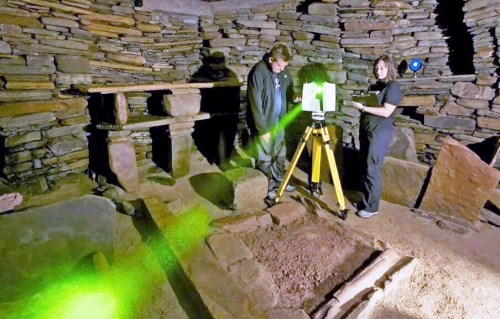
The article reviews the methods for 3D modeling of Belarus’ historical and cultural heritage sites based on the integration of terrestrial laser scanning and digital photogrammetry data, ensuring the necessary accuracy and completeness of information for restoration design and information models of buildings and structures creation.

There were presented scientific and practical developments based on cutting-edge IT and AI technologies, ensuring the translation of the Belarusian national musical cultural code into the global digital space.

The article considers methods for preserving, 3D reconstructing, and popularizing tile art in the Vitebsk region through the creation of the "House of tile" virtual museum project.

The article shows the use of digital tools to present the attractions of the Shumilino district.
INNOVATION ECONOMY
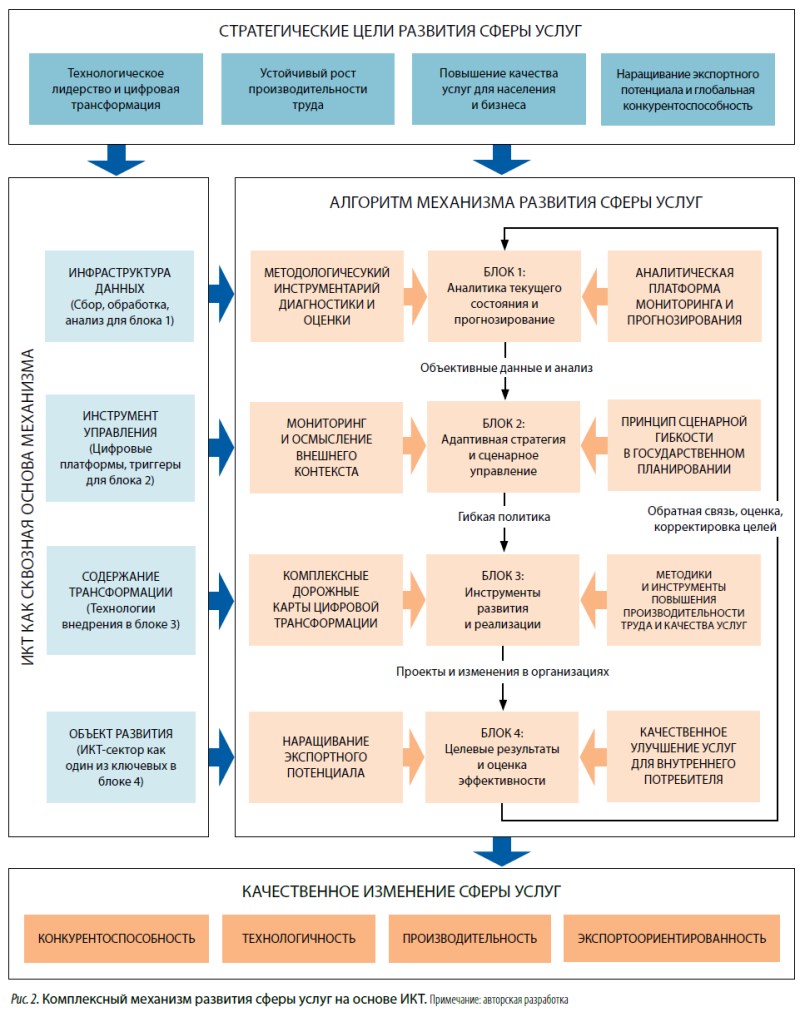
This article outlines the global role and significance of the service sector in terms of its contribution to the economy and employment. The need for a fundamentally new approach to managing tertiary sector development stems from the challenges facing the economy. The essence of the proposed mechanism lies not in the rejection of systemic planning per se, but in its radical rethinking, envisioning a transition to management through the creation of an adaptive, «intelligent» environment. ICTs act in the innovation paradigm not as a separate sector to be supported, but as a critical cross-cutting catalyst and infrastructural framework. The article provides a statistical analysis of the key indicators of the service sector and its contribution in countries with different types of economies. The authors substantiate the importance of implementing the proposed mechanism.

This paper aims to explore the mechanism of digital technology’s impact on the efficiency of food industry enterprises and to construct an evaluation model for empirical testing. The study first uses the Data Envelopment Analysis (DEA) method to measure the technical efficiency of China’s A-share listed food industry companies from 2018 to 2024. Subsequently, the Tobit regression model is employed to analyze the impact of the level of digital technology application on enterprise efficiency. The findings indicate that the level of digital technology application has a significant positive effect on the technical efficiency of food industry enterprises, with a coefficient of 0.125, significant at the 1% level. Furthermore, firm size, R&D investment, and the degree of market competition also have important impacts on enterprise efficiency. The results of this study provide a theoretical basis and practical guidance for food industry enterprises to implement digital transformation and improve production efficiency, and also offer a decision-making reference for government industrial policy formulation. The research shows that Chinese food industry enterprises generally experience approximately 25 % efficiency loss, mainly due to insufficient management and technical capabilities rather than inappropriate production scale. Therefore, enterprises should accelerate digital transformation, strengthen R&D innovation, and optimize internal management; governments should improve digital infrastructure, introduce special incentive policies, and maintain a fair competitive environment.
The article analyzes the potential of sustainable digital marketing for Belarusian organizations in the market of the People’s Republic of China in the context of deepening bilateral economic cooperation, the digitalization of foreign economic activity, and the growing importance of the ESG approach in international business. The study examines the theoretical foundations of contemporary marketing concepts, including holistic marketing, ESG marketing, and relationship marketing, and substantiates the feasibility of their application considering the specific features of China’s digital and institutional environment.
Special attention is paid to synergy and emergence as key criteria for selecting and implementing a marketing concept in the highly dynamic Chinese market.
The article explores opportunities for using digital platforms, marketplaces, online communications, intelligent analytics, and artificial intelligence tools to enhance the effectiveness of marketing activities of Belarusian companies. Directions for brand differentiation and positioning are proposed based on the integration of digital technologies, ESG principles, elements of Belarusian culture, and features of the socio-economic model of the PRC. Key areas for the development of sustainable digital marketing are identified, including platform integration, omnichannel strategies, personalization, and analytical support for managerial decision-making.
The conclusion emphasizes the need for a comprehensive transformation of marketing activities of Belarusian organizations toward sustainability, intelligent digitalization, and long-term partnership in the Chinese market.
DIGITAL PERSPECTIVE

The article examines the features of artificial intelligence (AI) integration into China’s e-commerce sector amid expanding cross-border trade and the growing complexity of the digital commerce environment.
The study focuses on the functional capabilities of AI tools embedded in Chinese e-commerce platforms and their role in the localization of foreign brands in the Chinese market.
Practical examples of artificial intelligence applications on leading Chinese platforms are presented, and the main areas of AI usage are identified, including algorithmic hyper-personalization, intelligent customer support and communication automation, multimedia content generation and adaptation, predictive analytics and logistics optimization, as well as intelligent seller support and data analytics. The activities of the National Pavilion of Belarus – a specialized virtual trading platform – are analyzed as an example of the practical implementation of a localization strategy for Belarusian products using embedded AI tools of Chinese platforms. It is substantiated that the use of embedded AI tools enables foreign companies to reduce institutional, linguistic and cultural barriers to market entry, decrease marketing and transaction costs, and facilitate effective brand localization.
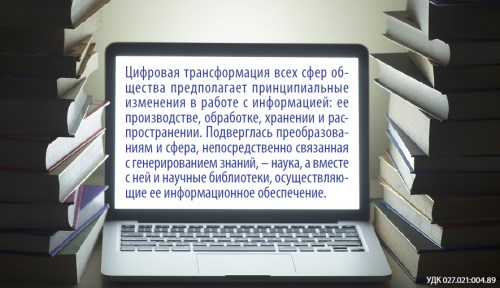
The article considers current trends in the use of artificial intelligence and neural network solutions in library and information services. The need for a strategic approach to their practical implementation is substantiated to increase the efficiency in generating scientific knowledge.
CHERNOBYL: 40 YEARS OF REFLECTION

The article presents an assessment of the demographic development of the territories of the Republic of Belarus affected by the Chernobyl nuclear power plant accident. It is shown that the Chernobyl factor, superimposed on nationwide socio economic transformations, has generated persistent differences in population reproduction indicators in the affected districts compared to national averages, reinforcing depopulation processes, population ageing, and distortions in the age sex structure. It is established that most of these territories are characterized by persistently elevated mortality levels, relatively low fertility, substantial natural decrease, and migration outflow, which lead to the predominance of regressive and contrast factor types of demographic balance and to the consolidation of a zone of demographic risks. It is substantiated that mitigation of depopulation trends is possible only if targeted state policies to support the affected territories are combined with measures to stimulate economic activity, improve quality of life, and differentiate demographic development strategies depending on the level of radioactive contamination and the structure of the demographic balance.
DISCOVERING YOURSELF
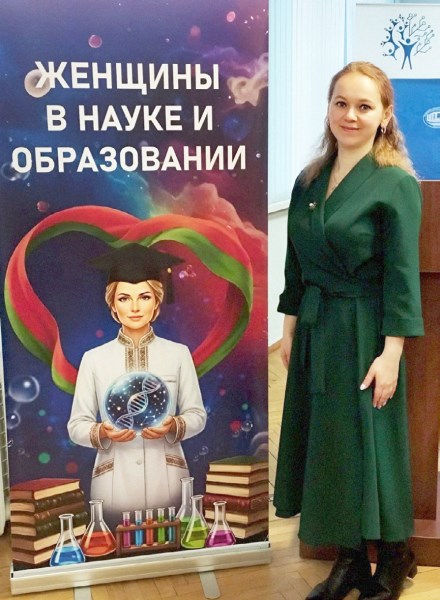
Researcher in the Sector for research on human resource potential at the Institute of Sociology of the National Academy of Sciences of Belarus discusses the importance of overcoming gender stereotypes in the educational and scientific environment and fostering professional solidarity.

ISSN 2412-9372 (Online)